
Roulette looks simple from the outside. A wheel spins, a ball drops, and a number comes up. But the way that number is decided, and the odds behind every bet on the table, come down to some fairly precise mathematics that go back further than most players realise.
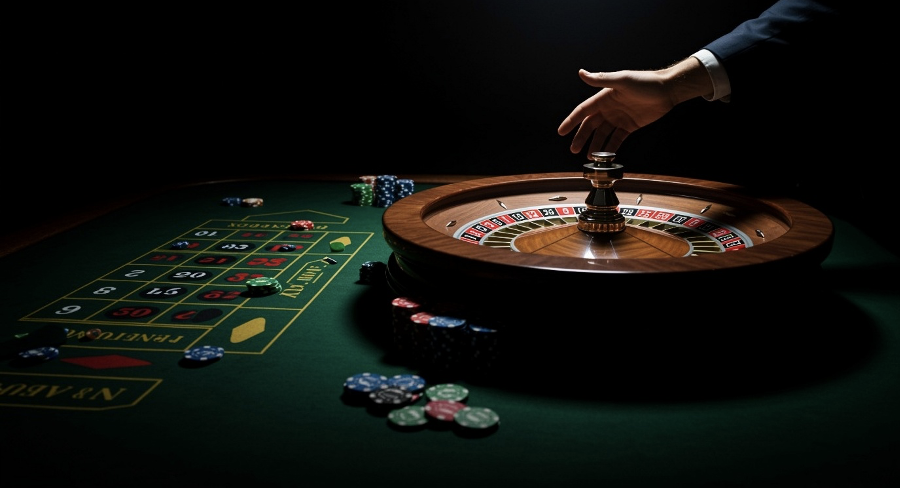
Whether you're new to the game or just curious about what's actually happening under the surface, it helps to understand the wheel itself first. If you'd rather see it in action than read about it, you can play against a live dealer and watch the wheel in real time as you go.
How the wheel is actually built
There are two main versions of the wheel you'll come across. The European wheel has 37 pockets, numbered one to 36, plus a single green zero. The American wheel has 38, adding a second green pocket marked double zero.
That one extra pocket looks minor, but it changes the maths considerably. On the European wheel, the house edge sits at around 2.70%. Add the second zero and it climbs to roughly 5.26%, according to a breakdown of the two layouts which notes the extra pocket nearly doubles the advantage built into the American version.
In practical terms, a bet on red or black gives you close to a 48.6% chance on the European wheel, dropping to about 47.4% on the American one, simply because there's an extra non-coloured pocket in play.
Where the single zero wheel came from
The single zero wheel has a specific origin. It's generally traced back to 1843, when French casino operators François and Louis Blanc introduced it in Bad Homburg, Germany, partly as a way to make the game more appealing than the double-zero tables already in use.
The double-zero version had actually come first, and it later found its way to America via Mississippi riverboats in the 19th century, where operators kept the extra pocket because it suited their margins.
Today, European style wheels are the standard across most of the continent, while the American version remains far more common in the United States.
Why the odds stay the same every spin
None of this changes from spin to spin. Every outcome on a Roulette wheel is independent of the one before it, so a run of reds or blacks tells you nothing about what's coming next. The house edge is a long run average built into the rules of the table, not something that shifts based on recent results.
How the different bets pay out
Bet types work off the same fixed structure. Outside bets, like odd or even, red or black, or high or low, cover close to half the wheel and pay evenly. Inside bets, on single numbers or small groups, pay out at higher odds because the chance of landing on them is smaller.
Some European tables also apply rules such as la partage, which returns half your stake on losing even money bets when the ball lands on zero, slightly softening the edge on those specific wagers.
Understanding the wheel doesn't change the outcome of any given spin, but it does help explain why the numbers behave the way they do, and why the version of Roulette you're sitting down to plays a small but measurable part in the odds you're working with.