
Tickets are on sale for new behind-the-scenes Exploration tours at the Science and Innovation Park in Wroughton.
The tours will take visitors up close to objects from the Science Museum Group Collection that have made extraordinary journeys.
With Christmas just around the corner, the tours are billed as a unique gift for anyone with passion for science, history or adventure.
Matt Moore, the Director of the Science and Innovation Park, said: "The Science and Innovation Park is home to more than three hundred thousand extraordinary objects, but it's the stories behind them that truly bring them to life.
"Our Exploration tours shine a light on the remarkable science, technology and people that have transformed our understanding of the world and beyond.
"We're delighted to share more of the collection, and hope visitors leave inspired by the tales of exploration and discovery they've heard from our wonderful team of tour guides."
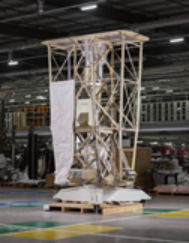
Highlights include the unusual gondola in which Swiss physicist Professor Auguste Piccard ventured into the stratosphere.
Piccard and his colleague Max Cosyns squeezed inside the capsule beneath a hydrogen-filled balloon, reaching a record-breaking 16,201 metres above the Earth.
During his multiple pioneering ascents, Piccard conducted scientific investigations at extreme altitude and later adapted the principles behind the design for deep-sea exploration.
Another highlight has travelled much further afield: an X-ray telescope built in Birmingham that flew into space aboard Space Shuttle Challenger in 1985.
Scientists at the University of Birmingham designed the Spacelab 2 X-ray telescope to capture the first high-energy X-ray images of the centre of the Milky Way.
Positioned in Challenger’s open payload bay, it surveyed the galaxy during the 10-day mission. Years later, when it was at risk of being scrapped, a scientist who had helped build it contacted the Science Museum Group, which gave it a new home.
Back on Earth, a 1950s Tucker Sno-Cat tells a story of exploration in some of the planet’s most extreme conditions.
Used during the Commonwealth Trans-Antarctic Expedition, the vehicle helped complete the first motorised crossing of Antarctica, a 3,500-kilometre journey.
The journey saw Sno-Cats stuck in crevasses, breakdowns in temperatures as low as -40°C and a medical emergency caused by a carbon monoxide leak, before the expedition successfully completed its scientific survey of the route.
Alongside the new weekend Exploration tours, the Science and Innovation Park will continue its 90-minute highlight tours showcasing the extraordinary range of objects cared for at the site.
Stops on this tour include a 1980s Cyberman costume from Doctor Who, objects from Professor Stephen Hawking’s office, a Wall’s ice cream tricycle with a surprising wartime story, and an electric car dating from 1916.
Whether on the new Exploration tour or one of the Park's regular public tours, visitors can go behind the scenes of the Hawking Building, the state-of-the-art storage facility that is home to more than 300,000 scientific, technological and medical objects from the national science collection.
At almost 300 metres long and 90 metres wide, the Hawking Building is comparable in size to 600 double-decker buses.
The purpose-built facility enables the Science Museum Group to store, conserve, research and digitise its unique collection.
Within the 27,000m² building there are 30,000 metres of shelving, providing a home for the tiniest and most delicate objects, along with a further 5,500m² of pallet racking and 3,500m² of freestanding space, which hold some of the larger objects in the collection.
The building also houses conservation laboratories, photography studios and specialist research spaces.
The Science and Innovation Park is also a major research resource. Researchers can apply to access objects from the collection – either in person or remotely – free of charge, as well as explore the Science Museum’s Library and Archive collection of over half a million items.
More than half a million historic objects can also be found on the Science Museum Group’s online collection, one of the world’s most extensive digital science collections.
Website visitors can discover these incredible objects and the stories behind them through films, articles, a podcast, a journal and other online tools.
(All images courtesy of Science Museum Group)








Your Comments
Be the first to comment on this article
Login or Register to post a comment on this article