
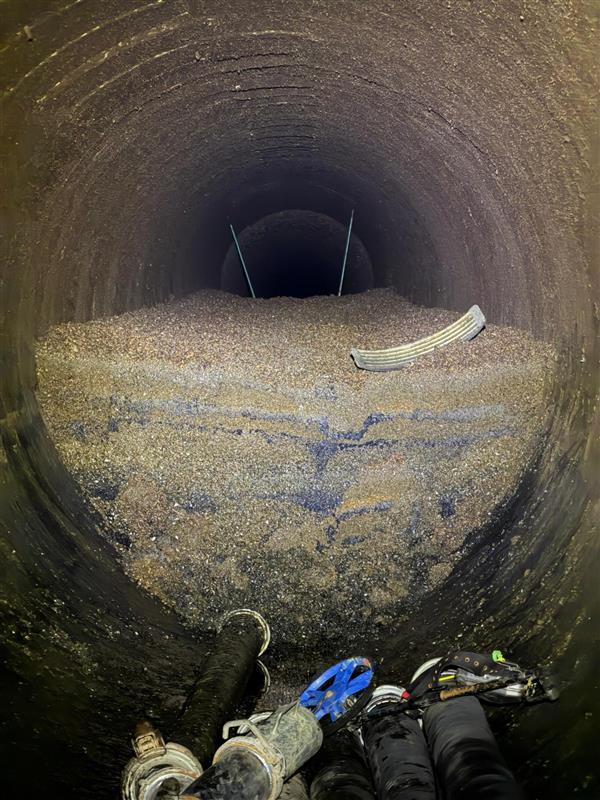
Thames Water has announced that it removes four Olympic swimming pools' worth of invasive Quagga mussels from its pipes every year.
The firm spends over £6m every year tackling Invasive Non-Native Species (INNS).
Prolific burrowers the Signal Crayfish and Chinese Mitten Crab also pose significant threats to Thames Water infrastructure and local environments.
The company says that In scenes which wouldn't be out of place in an underwater horror movie, engineers find tunnels filled with hundreds of thousands of invasive mussels.
Quagga mussels are molluscs, in the same class as clams, oysters and scallops. They are prolific breeders, with a mature mussel capable of producing a million eggs per season.
With a single mussel able to establish a new population and a boasting a lifespan of three to five years, they pose a significant risk to the nation’s water infrastructure. First discovered in Ukraine, this invasive species has spread across the world.
Alexandra Collington, Biosecurity & Invasive Non-Native Species Officer at Thames Water, said: “Quagga mussels may be small but the impact they have on our network is anything but. Whether crabs or crayfish we see non-native invasive species damaging our infrastructure and causing disruption.
"They pose a significant threat to native wildlife and biodiversity, affecting the health and balance of our ecosystems.
"We’ve committed over the next few years to increase our work tackling the impact invasive species have on our infrastructure, so that our network remains safe and we can protect our waterways and wildlife.”
The mussels attach themselves to hard surfaces in dense clusters, restricting water flow and increasing the risk of service disruption.
Their spread has accelerated across the UK’s waterways in recent years and creates a growing operational and environmental challenge for water companies. Engineers use power tools, hydro-blasters and in extreme cases specialist teams of divers are deployed to remove these mussels from water infrastructure.
Invasive species, Thames Water says, have a huge impact on infrastructure, society and environment, with INNS being one of the major causes of biodiversity loss.
Managing the impact of these species is critical to improving habitat connectivity, Biodiversity Net Gain Strategies and intrinsically linked to many of our other environmental programmes.
Signal Crayfish and Chinese Mitten Crab are other species that cause significant threats to Thames Water’s infrastructure. These are prolific burrowers, which causes extensive corrosion, increased siltation (narrowing pipes) and increase the risk of flooding.
Signal Crayfish can burrow a remarkable two metres deep into waterway banks, which can leave canals vulnerable to collapse. Chinese Mitten Crabs, named because of their distinctive fur tipped claws, have ravenous appetites and will take on anything in their way, putting native species at risk.
Thames Water have committed funding to continue to expand its monitoring and prevention work as part of its wider commitment to improving river health and strengthening resilience across its network.
There are ways in which the public can support too:
- Keep boats, clothing, footwear and equipment clean and dry after use. Follow the Government ‘Check, Clean, Dry’ guidance available on the GBNNSS website
- Don’t let your garden, pond or aquarium plants enter the wild
- Stop your pets entering the wild
- Look out for special alert species and report any sightings






Your Comments
Be the first to comment on this article
Login or Register to post a comment on this article