
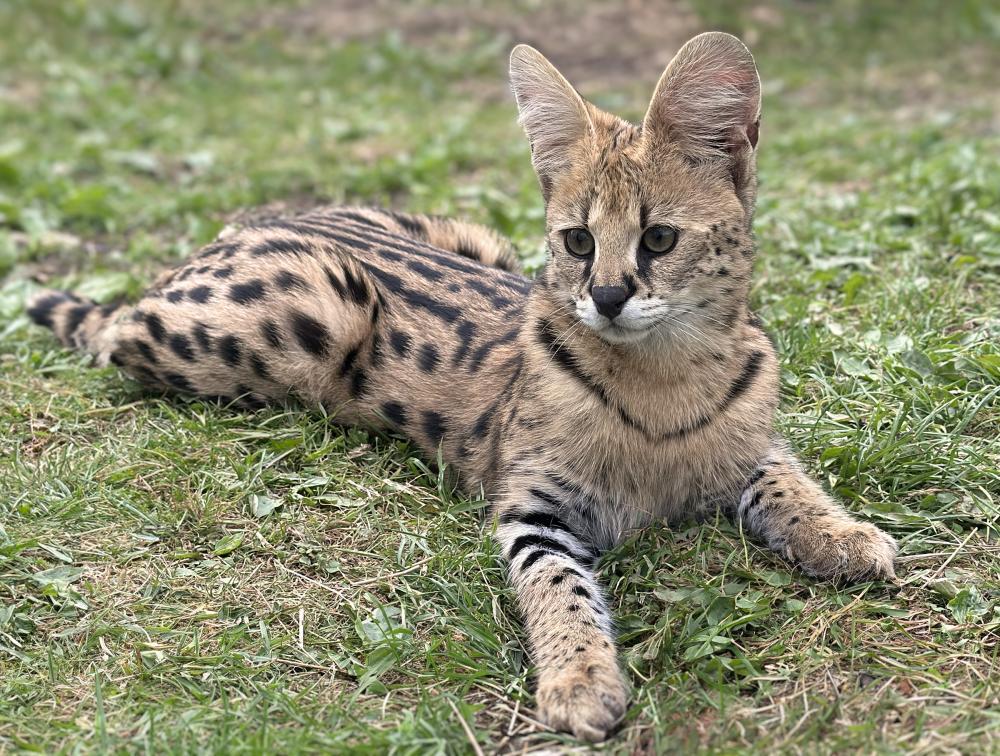
Studley Grange has just welcomed a new arrival to the zoo area. Luna is a 6 month old African Serval and has joined current residents in a specially designed enclosure tailored to her needs.
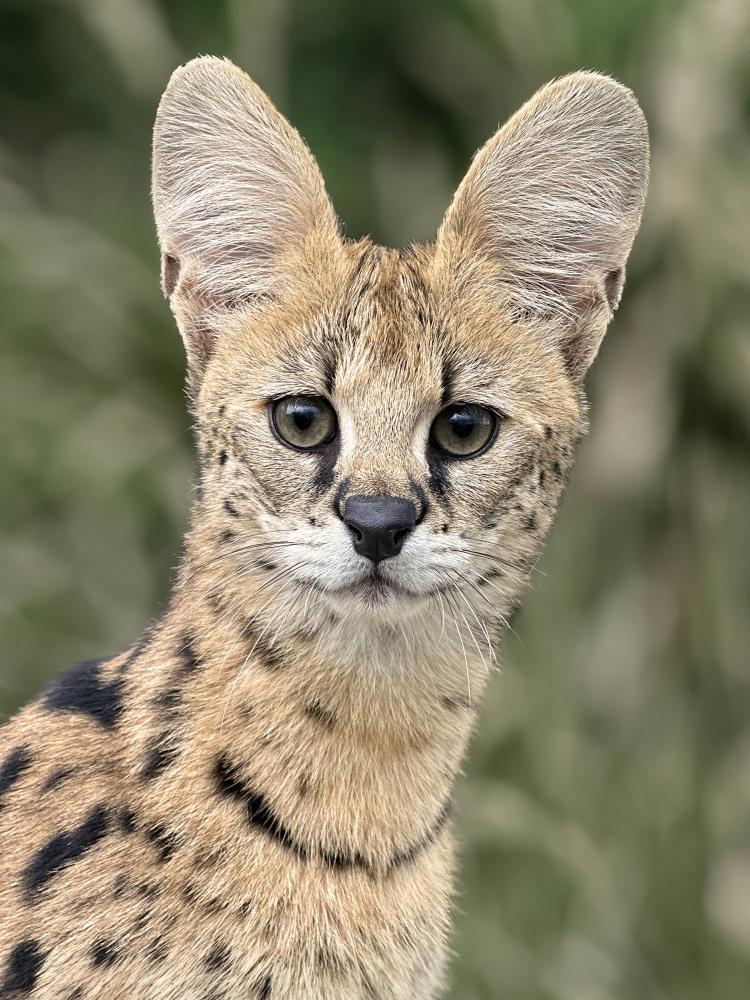
Servals are from sub-Saharan Africa where they live in grassland, wetland, moorland and bamboo thickets.
These beautiful cats inhabit a lot of protected areas where hunting is prohibited or regulated. Although these cats are on the ICUN database as least concern, there are growing concerns about the impact of the exotic pet trade. Serval are listed as Cites Appendix II which indicates that the species is not necessarily threatened with extinction but the trade must be controlled in order to avoid utilisation incompatible with their survival.
CITES (the Convention on International Trade in Endangered Species of Wild Fauna and Flora) is an international agreement between governments. Its aim is to ensure that international trade in specimens of wild animals and plants does not threaten the survival of the species.
ICUN (The International Union for Conservation of Nature) is a global organisation that brings together experts from different fields to advance nature conservation and sustainable development worldwide working in partnership with the ICUN.
Demand for wild cats and their hybrids have led to individuals being illegally taken from the wild as kittens and trafficked into other countries. They are then bred with domestic cats to produce hybrids like the Savannah. Savannahs can experience welfare issues and does not support the conservation of wild populations.
The welfare implications for these individual animals are an improper diet, which can lead to malnutrition and diseases. Servals and domestic cats have different gestation periods, so breeding the two can lead to miscarriage, deformities and still births. Inappropriate surroundings and space that restricts their predatory nature can cause territorial aggression and influence their mental wellbeing. This can also cause aggression towards family members and other household pets. Steryotypical behaviours can also develop this may show as pacing or repetitive movements.
A spokesperson said: "We believe that Luna was intended for the pet trade and instead has found a safe and happy home with us. She will have a forever home with us and always receive the best care. She has spent her key learning moments in captivity and has been very humanised, so will sadly never be able to be released back to the wild.
"We encourage anyone considering an exotic or hybrid wild cat to reflect on the serious welfare and conservation implications."


Your Comments
Be the first to comment on this article
Login or Register to post a comment on this article