
Behind the hoardings at Wichelstowe and Swindon's other big developments, builders are quietly rethinking what counts as rubbish. Residents are starting to notice the difference on local roads.
A quiet shift behind the hoardings
Anyone who has driven past a Swindon building site lately will have spotted the usual sights. Hoardings up, cranes turning, another bit of skyline taking shape. What is harder to see is what goes on inside. The way construction handles its own waste is changing, and it is reshaping how new homes, roads, schools and offices get built. For people who live here, that means fewer lorries rumbling past, less waste going to landfill, and a smaller footprint on every big project.
Why this matters in Swindon
Construction is, quietly, the country's biggest waste producer. DEFRA puts construction, demolition and excavation at around 62% of all the waste the UK generates, more than households, more than any other industry. Government targets keep pushing the sector to recycle more, and Wiltshire Council's waste strategy commits the area to moving material away from landfill where it can.
That picture lands on Swindon's doorstep. Wichelstowe, one of the country's largest housing schemes, is still expanding south of town. Add the town centre regeneration and the steady drumbeat of new housing, and there is a serious amount of soil, concrete and stone moving around. In the old way, almost all of it was left on site by lorry and came back as fresh material from a quarry.
The change is being driven by the kit that contractors can now get hold of. Blue Group, a UK supplier of recycling and processing equipment covering the South West, says demand for on-site recycling has risen sharply as builders move away from sending everything to landfill.
Why the old way is getting harder to justify
The traditional approach is straightforward, but not cheap. Material gets dug up, loaded onto a lorry and tipped off-site. New stone is then bought from a quarry, driven back in, and used. Every step costs money, time and diesel.
It also costs the people living nearby. Every lorry run adds to traffic, road wear, noise and exhaust, which anyone near a big development can probably vouch for. HMRC's landfill tax, the charge builders pay for every tonne they tip, climbs every April and now sits above £100 per tonne. Projects drag on for months or years, and smaller problems like wet weather or late deliveries snowball into longer build times.
Turning rubbish back into building material
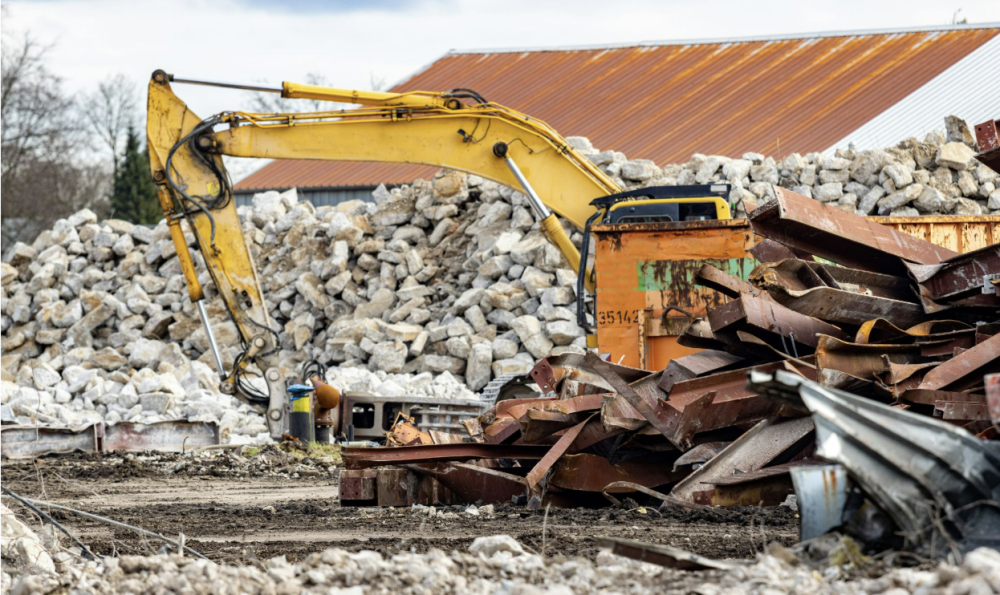
A growing number of contractors now sort and reuse material on-site rather than shipping it away. Soil gets put through a large powered sieve, called a screen, which separates the useful stuff from the rubbish. Broken concrete and brick get fed into a crusher, which grinds them into a coarse base material that sits under new roads, foundations and car parks. Smaller sites do this with a bucket attachment that clips onto a normal digger. Bigger ones bring in proper mobile crushers and screens.
The upshot is simple. Less waste leaves the site, less new material comes in, and the build keeps moving. Wiltshire planners are keen on developments that reuse material rather than dump it, and national housebuilders are putting on-site recycling into their standard playbook.
What it means for residents
The benefits are easy to spot. Every cubic metre processed on-site is one less lorry on local roads. When builders are not waiting on deliveries, projects move more quickly. Lower disposal, transport and stone costs feed back into the price of getting homes built. Sites are quieter, there is less dust, and local roads take less of a battering.
There is a knock-on for jobs too. Running screens and crushers on-site needs trained operators, fitters and engineers, skilled work that sits across the local construction and recycling supply chain.
An industry view
Terry Hughes, Product Director at Blue Group, says the change has been hard to miss. "Demand for on-site recycling has grown significantly across the UK, and what we're seeing around Swindon and the South West is right in line with that. Builders aren't treating waste as a separate headache; they're treating it as the starting point for the next bit of work."
"The kit is now good enough that on-site recycling makes sense for projects of all sizes. Fewer lorries, lower costs, less landfill, quicker builds, that's why it's becoming the default."
What to look out for
Drive past a Swindon site over the next year or two, and the signs will be there. Mobile screens and crushers are working alongside the diggers. Piles of old concrete turned back into hardcore on the spot. Hoardings advertising "circular construction" or "zero waste to landfill". Planning conditions put more weight on what happens to construction waste. The big-site disruption locals remember from a decade ago is, quietly, getting less disruptive.
The quieter side of growth
Swindon is growing, and the growth is happening more quietly and efficiently than it used to. On-site recycling will not magic away the disruption that comes with any major build, but it is making a measurable dent. For people who live near these projects, that is good news: better homes, built quicker, with less knock-on for the streets around them.
The sites changing Swindon's skyline are also changing how the town is built. Most of the difference happens before the cranes go up.