
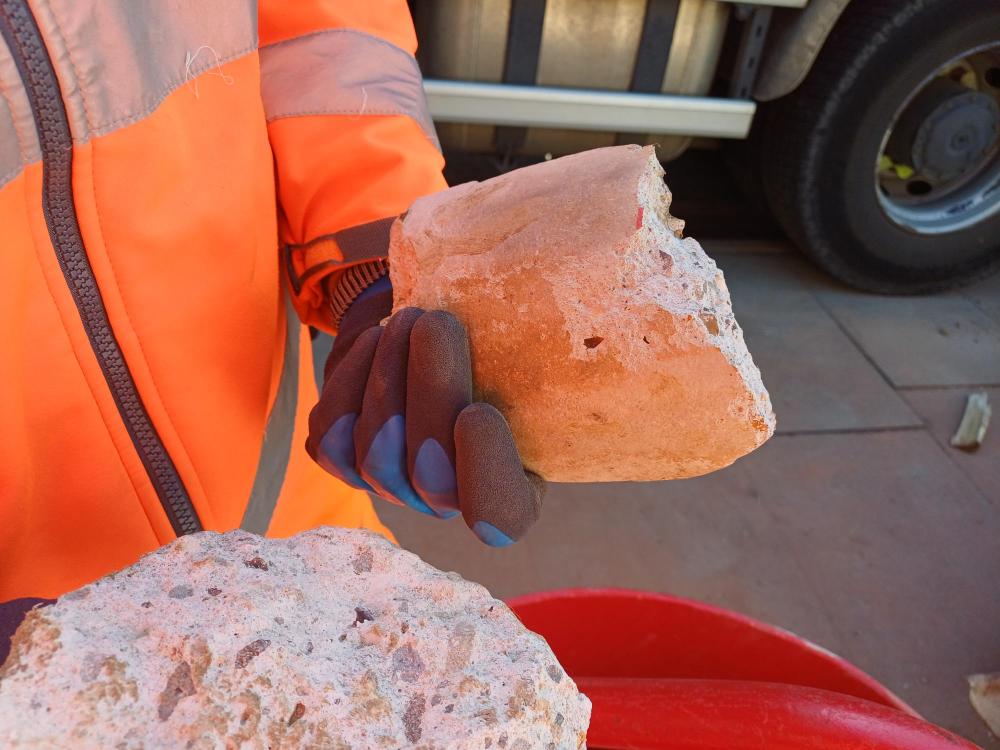
Thames Water has revealed that it spends an estimated £1.6 million every year clearing hardened concrete from its sewer network.
The firm has over 60 of what it terms concrete abstraction jobs running at any one time, with big jobs taking thousands of engineer hours to remove.
Concrete is removed using ultra-high-pressure water jets to break it down at a pressure of 35,000 psi before it can be sucked out.
The hardened concrete, Thames Water says, is linked to building companies failing to dispose of waste correctly.
Concrete can permanently damage the sewer network, disrupt services for customers and poses a significant environmental risk.
It should never be poured down drains or left where it can wash into the sewer system. However, the company is seeing repeated incidents in which building firms are disposing of commercial construction waste directly into the sewer network.
Over the past 12 months, engineers have spent thousands of hours removing solidified concrete from pipes across London and the Thames Valley region. The process requires specialist high-power water jets to break down the concrete into small pieces so it can be safely extracted without damaging the pipes.
The pressure, Thames Water says, is equivalent to placing the weight of a large SUV onto an area the size of a thumbnail.
Concrete build-ups in pipes are identified using ultra-sensitive sewer sensors, which alert engineers to obstructions in the network or are detected when blockages lead to sewer flooding.
If left untreated concrete in the sewer network restricts wastewater flow that can then cause wastewater to back up on to streets, homes, schools and businesses. It can also cause significant damage to the pipework.
Thames Water's Tim Davies said: “We are urging construction companies to be more vigilant in their disposal of concrete, to prevent damage to our sewer network, as it takes valuable time and resource away from essential infrastructure upgrades.
"The concrete removal process can be extremely complex. In many cases, we use high-pressure cutting units to break down concrete within the sewer before it can be safely removed.
"This work requires significant investment with expensive equipment, a large team of skilled engineers, and a considerable amount of time to complete.”
“Our teams are working closely with construction companies across our communities to raise awareness of the serious damage and disruption caused by improper disposal.
"My message to businesses and contractors is simple: please ensure concrete is disposed of correctly.
"Preventing this issue in the first place is far more effective than dealing with the consequences later.”
Discharging concrete into the sewer network is illegal and can result in enforcement action, with companies liable for the cost of repairs and potential prosecution.
Thames Water’s network protection teams investigate incidents and trace concrete back to construction companies who are then asked to contribute to the cost.






Your Comments
Be the first to comment on this article
Login or Register to post a comment on this article