
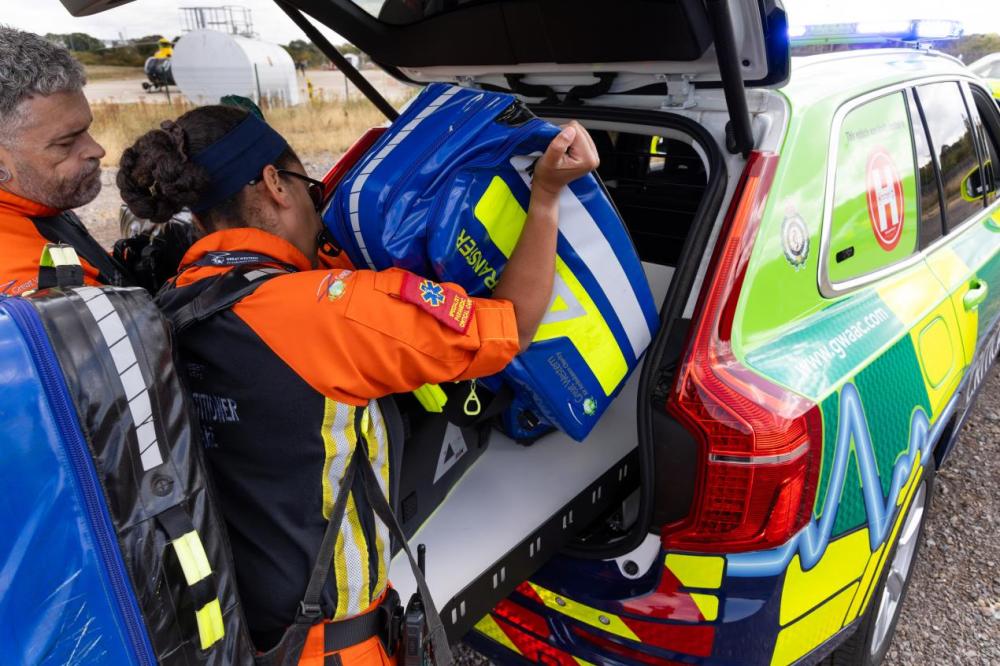
A fleet of three state-of-the-art rapid response vehicles is strengthening Great Western Air Ambulance Charity’s (GWAAC) ability to deliver lifesaving critical care by road.
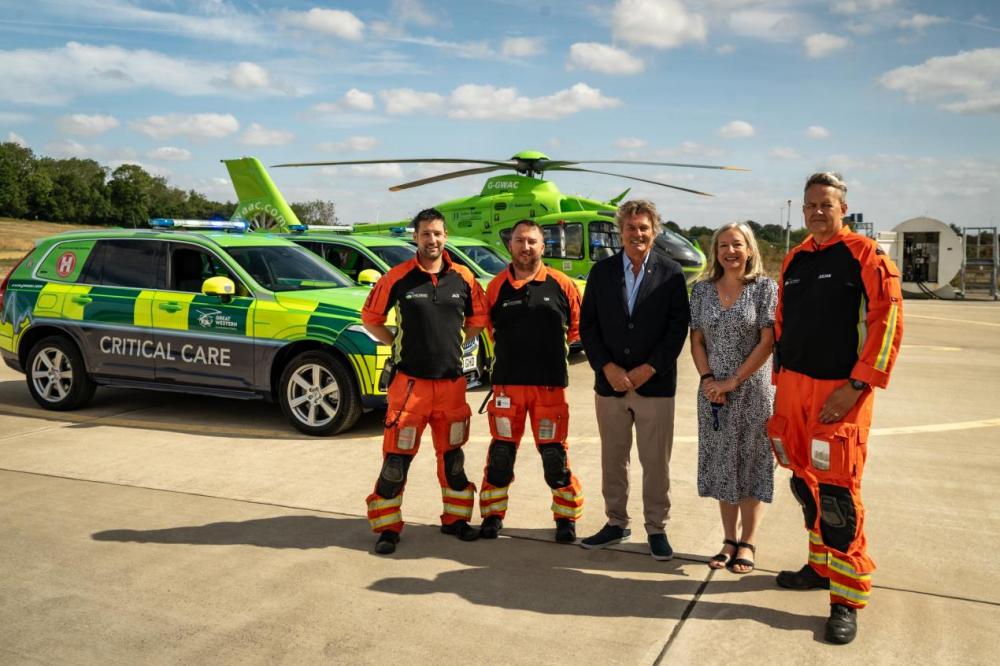
(Picture: Adam Davis Photography, and on Instagram @planespotter_adam"
The charity says the new cars are a significant investment in its operational capability.
The three Volvo XC90s replace the charity’s older fleet of Skoda Kodiaqs that are nearing the end of their serviceable life, and have been fitted to emergency response standard.
The entire new fleet was generously funded by the HELP Appeal, which is also the only charity in the country dedicated to funding NHS Hospital helipads.
With no day-to-day funding from the Government or National Lottery, GWAAC is reliant on the generosity of individuals, community groups and businesses across its region, and the grant from the HELP Appeal means the charity can continue to respond to more than six patients a day, delivering lifesaving care as quickly as possible.
Robert Bertram, Chief Executive for the HELP Appeal, said: “While the HELP Appeal is best known for funding lifesaving NHS hospital and air ambulance base helipads which are essential in emergency care, critical care cars are vital too.
"They enable specialist teams to reach patients quickly when helicopters cannot fly or when travelling by road is the fastest option.
"We are proud to fund these three state-of-the-art vehicles and sincerely thank our supporters, whose generosity is helping us to deliver lifesaving care in the region and beyond.”
Tim Ross Smith, Operations Officer for GWAAC, said: “Our previous vehicles served us well but were becoming increasingly costly to maintain and more prone to issues as they reached the end of their operational life.
"We’re very grateful for the support of the HELP Appeal which has helped ensure our crew can continue reaching patients quickly to provide their exceptional level of care to people with life-threatening injuries and medical emergencies every single day.”
GWAAC’s cars are vital for transporting its skilled crew and equipment to people needing pre-hospital critical care. Without them, some patients may not receive lifesaving treatment in time to give them the best possible chance of reaching hospital.
Each vehicle carries the same emergency equipment as the helicopter, including a portable ventilator, a LUCAS Machine for automatic CPR, an ultrasound device, blood products for patients suffering catastrophic haemorrhage and specialist equipment for children and babies.







Your Comments
Be the first to comment on this article
Login or Register to post a comment on this article