
There is a specific smell that anyone who grew up in a British seaside town in the eighties or nineties will recognise immediately: salt air mixed with hot electronics, carpet worn thin by decades of shuffling feet, and the particular kind of artificial light that only existed inside an amusement arcade. Southend, Blackpool, Brighton, Skegness: every resort had its arcade, and every arcade had its regulars. These were not gambling dens in the way that word implies moral judgement. They were social spaces, places where you went with fifty pence in your pocket and the reasonable expectation that you would come back out having had a good time whether or not the 2p waterfall machine had been generous.
The golden age and what it meant
The amusement arcade reached its cultural peak somewhere between the mid-seventies and the mid-nineties. The arrival of video games transformed the business model: alongside the traditional fruit machines and coin pushers, arcades now contained Space Invaders, Pac-Man, Street Fighter II and later Tekken cabinets that attracted a completely different demographic. Young men queued to play, watched each other play and built informal social hierarchies around skill at specific machines. This was competitive gaming before competitive gaming had a name.
The economics were different from what came later. Machines were physical objects with maintenance costs, and the investment required to stock a floor of fifty or sixty cabinets was substantial. The margins came from volume: enough people paying enough small amounts over enough hours to cover rent, rates, wages and repairs. It worked, at its peak, extremely well. The seaside holiday was the primary family leisure format for a generation of British workers, and the arcade was a fixed part of that ritual.
The decline and its causes
The decline was gradual and had multiple overlapping causes. Home gaming consoles improved rapidly through the nineties, reducing the exclusivity of the arcade experience: if you could play a version of the same game in your living room, the case for spending the afternoon in a seafront building was weaker. Package holidays made the British seaside a less automatic choice. High streets became more expensive. The 2p machines that had been the entry point for children came under increasing regulatory scrutiny as the distinction between amusement gaming and gambling became the subject of legislative attention.
By the 2000s, many arcades had closed. The ones that remained adapted: some focused on redemption machines, where tokens could be exchanged for prizes, targeting families with young children. Others moved upmarket, with better machines and cleaner premises. A handful of heritage arcades survived on the strength of their retro appeal, deliberately preserving the aesthetic of an earlier era as their selling point.
What the digital era inherited
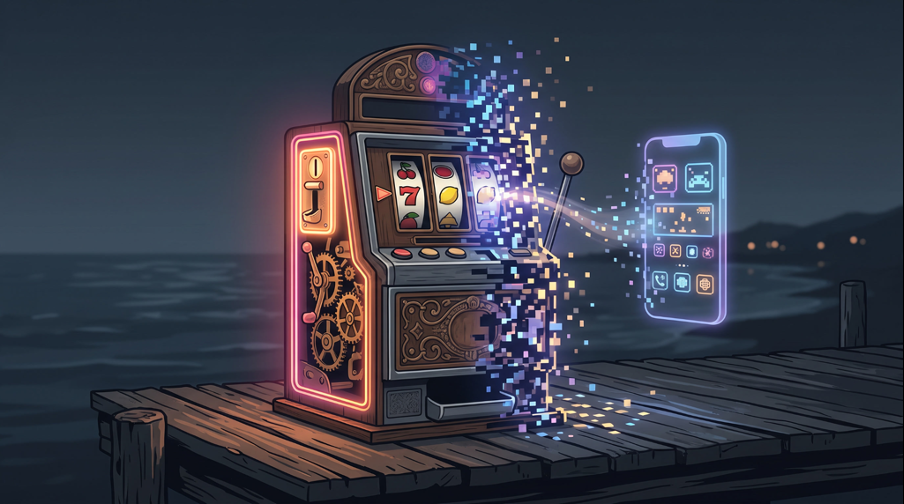
The spirit of the amusement arcade — immediate entertainment, accessible stakes, variety of experience, the particular tension of a game whose outcome you do not control but which your choices nonetheless influence — did not disappear with the physical buildings. It migrated, sometimes consciously and sometimes not, into the design of digital entertainment platforms.
666 Gambit Casino is worth examining in this context as an example of how the design philosophy of the arcade has translated into the regulated digital environment. The variety of slots available on the platform, ranging from classic three-reel formats that would have been recognisable to a visitor of any eighties seaside arcade through to modern video slots with multiple bonus features and progressive jackpots, reproduces the essential experience of walking into an arcade and choosing where to spend your money. The difference is that every aspect of the digital version is regulated, audited and subject to mandatory player protections that the old arcades, operating under much lighter touch oversight, never had to implement.
Regulation as the thing the arcades never had
This is perhaps the most significant way in which the digital platforms have genuinely improved on their predecessors. The old amusement arcades operated under rules that were, by contemporary standards, remarkably permissive. Fruit machines in arcades were classified differently from those in licensed premises, with different payout requirements and different accessibility rules. Children could access machines in arcades that would have been off-limits in a betting shop. The social atmosphere was generally benign, but the regulatory infrastructure was thin.
Modern licensed platforms operate in a completely different environment. The Gambling Commission requires operators to verify the age and identity of every user before allowing real-money play, to implement responsible gambling tools including deposit limits and self-exclusion, and to submit to regular audits of their random number generators. 666 Gambit Casino, operating under this framework with its certified RNG, published RTP figures for each game, and mandatory safer gambling features including session time alerts and cooling-off periods, represents a version of the arcade experience that is simultaneously more accessible and more carefully managed than anything that existed in the buildings it has replaced.
The continuity of pleasure
What survives, beneath the regulatory architecture and the technological transformation, is something simpler: the pleasure of a game you do not entirely control, played for stakes that are meaningful but not catastrophic, in an environment designed to make that experience enjoyable. The penny waterfall machine and the modern video slot are very different objects. The experience they are designed to produce is recognisably related.
Britain's amusement arcades are mostly gone, and the ones that remain are curiosities rather than mainstream leisure destinations. What they gave their regulars, the particular kind of low-stakes excitement that punctuated a seaside afternoon, has found its way into a different medium. The carpet is gone. The smell of hot electronics is gone. The fundamental appeal, it turns out, was never really about either of those things.